Chinese
 English
|
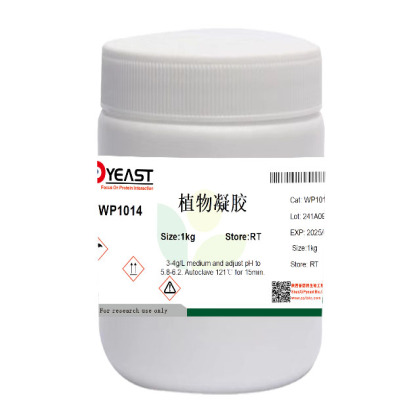
Plant Gel
Plant Gel
Plant gel is secreted by the bacterium Pseudomonas and is a mixture of glucuronic acid, rhamnose, glucose, and other components. The gel formed is colorless, transparent, and highly resilient. It overcomes the inherent shortcomings of traditional agar in plant tissue culture and is a key component for preparing plant tissue culture media and microbial media. The gelling of plant gel requires the presence of divalent cations and is sensitive to pH. The concentrations of calcium and magnesium ions in common plant culture media are generally sufficient for plant gel to solidify. If calcium and magnesium ion levels are reduced, the amount of plant gel should be appropriately increased. Plant culture media usually have their pH adjusted to 5.8; pH values below 5.5 can severely affect gelation. Low-salt media used in microbiological studies often require the addition of calcium salts, magnesium salts, or an increased concentration of plant gel. Common working concentrations of plant gel are: for MS medium, 2.5–4 g/L; for 1/2 MS medium, 5–8 g/L; and for microbial media, 10 g/L.
1. This product is for scientific research use only. Please do not use it for medical, clinical diagnosis or treatment, food and cosmetics, etc. Please not store it in a general residential area. 2. For your safety and health, please wear a lab coat and disposable gloves and masks when operating. 3. The experimental can be affected by a variety of factors, and the relevant treatment is limited to the product itself, and does not involve other compensation. |