Chinese
 English
|
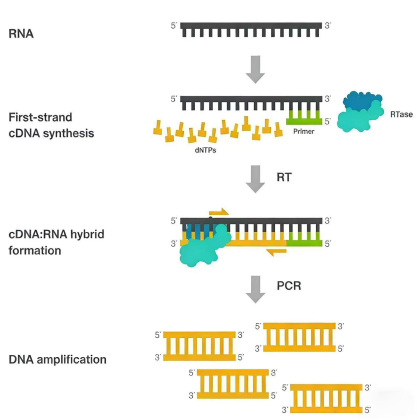
Service Introduction RT-PCR (Reverse Transcription-Polymerase Chain Reaction) is a technology that combines RNA reverse transcription (RT) with cDNA polymerase chain amplification (PCR). First, cDNA is synthesized from RNA through the action of reverse transcriptase. Then, using cDNA as a template, the target fragment is amplified. RT-PCR is a sensitive and versatile technique that can be used to detect gene expression levels in cells, the amount of RNA viruses in cells, and to directly clone specific gene cDNA sequences. The RNA used as a template can be total RNA, mRNA, or in vitro transcribed RNA products. Regardless of the type of RNA used, it is crucial to ensure that the RNA is free from RNase and genomic DNA contamination. Service Advantages ▶We currently accept samples in the form of material from species consistent with the reference sequence, or genomic DNA/total RNA of such material, or fresh tissue or cells. The experimental materials must be kept fresh, so please immediately freeze them in liquid nitrogen after sampling or add a sample stabilizer (such as Sample Protector); ▶Genomic DNA/total RNA shows no obvious degradation, with a total amount greater than 100 mg. If the gene abundance is low or the retrieved gene is relatively long, please provide as much material as possible to ensure the experiment proceeds smoothly; ▶Due to individual differences in materials and the potential for mutations during the PCR process, we do not guarantee that the obtained gene will be completely identical to the reference sequence. Service Process
Article Case Cloning, Expression Characteristics of Farnesyl Pyrophosphate Synthase Gene from Platycodon grandiflorus and Functional Identification in Triterpenoid Synthesis academic journal:Journal of Agricultural and Food Chemistry
PgFPS full-length product (M: Marker DL 2000). Applicable Fields ▶Gene expression analysis: qRT-PCR can be used to quantitatively measure gene expression levels, helping researchers understand changes in genes under different conditions. For example, qRT-PCR can be used to analyze the expression changes of specific genes after drug treatment. ▶Pathogen detection: qRT-PCR can be used to detect and quantify the presence and amount of pathogens (such as viruses, bacteria, etc.). For example, qRT-PCR can be used to detect viral infections. ▶Mutation analysis: qRT-PCR can be used to detect and quantify mutations or polymorphisms in DNA sequences. For example, in genetic disease research, qRT-PCR can be used to analyze the expression changes of mutated genes, further understanding the impact of mutations on gene function and disease development. ▶miRNA research: qRT-PCR can be used to quantitatively measure the expression levels of microRNAs (miRNAs), revealing the role of miRNAs in gene regulation. ▶Epigenetics research: qRT-PCR can be used to study changes in epigenetic marks such as DNA methylation and histone modifications. For example, qRT-PCR can be used to analyze the expression levels of specific histone-modifying enzymes to explore their role in epigenetic regulation. |