Chinese
 English
|
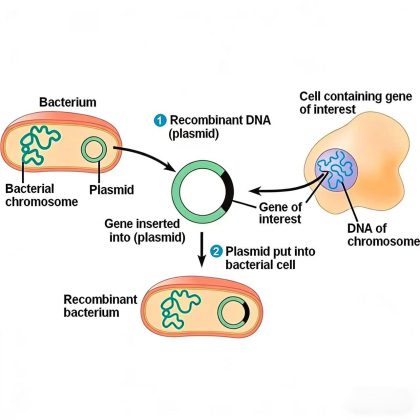
Service Introduction Subcloning and vector construction are common techniques in genetic engineering, mainly used to insert a target gene into a vector DNA molecule to create recombinant DNA molecules. Subcloning is the process of transferring a DNA molecule from one vector to another, usually involving the use of restriction endonucleases to cut the DNA molecule and insert the target DNA fragment into another vector. Vector construction involves inserting the target gene into an existing vector molecule, typically achieved through techniques such as PCR amplification and restriction endonuclease digestion. These techniques are widely used in fields such as genetic engineering, biopharmaceuticals, and agricultural production, providing researchers with an effective and reliable method for constructing recombinant DNA molecules. CRISPR/Cas gene editing vector construction: Cs9 technology (CRISPR-Cas9) is a revolutionary gene-editing platform derived from the bacterial immune system. It precisely targets DNA using a 'guide RNA' and employs the 'Cas9 protein' to cut DNA, enabling efficient and programmable modifications of biological genomes. It has not only propelled rapid advancements in life science research but also shown transformative potential in areas such as disease treatment and agricultural breeding. Construction of shRNA interference vector: RNAi interference (RNAi) refers to the gene silencing phenomenon induced by double-stranded RNA within organisms, and it was first discovered in nematodes. In the study of RNAi in plants, whether for verifying the function of unknown genes or regulating the expression of known functional genes, constructing the corresponding RNAi expression vector is the most fundamental experimental step and a necessary method. In RNAi research, interference is usually triggered by introducing hairpin RNA (hpRNA) into cells. Specifically, when constructing a binary vector for plant transgenics, a transcriptional unit of 'sense sequence–loop–antisense sequence' is driven by a strong promoter, and the transcribed RNA can form hpRNA. The hpRNA is then processed by the DICER enzyme into small interfering RNAs (siRNAs). These siRNAs bind with proteins such as ARGONAUTE (AGO) to form the RNA-induced silencing complex (RISC). Subsequently, the siRNAs pair complementarily with mRNA, and RISC cleaves and degrades the RNA molecules, thereby interfering with gene expression.。 Construction of VIGS vector: Virus-induced gene silencing (VIGS) is a method for studying gene function that does not rely on transgenic technology. It can quickly and efficiently silence target genes and is a type of post-transcriptional gene silencing (PTGS). Therefore, for plants without transformation systems, the VIGS technique can be used to study gene function. The VIGS system based on Tobacco rattle virus (TRV) is currently the most widely used system. The binary vectors used are pBINTRA6 (also written as pTRV1) and pTV00 (pTRV2). Construction of overexpression vector: Gene overexpression technology refers to the method of constructing a target gene under a constitutive promoter, tissue-specific promoter, or the gene's own promoter, and introducing it into a host to achieve increased gene expression. In gene function research, constructing the corresponding overexpression vector is a fundamental experimental step and necessary method for studying the functions of unknown genes, regulating the expression of known functional genes, or complementing the function of mutant genes. Service Advantages ▶With years of experience in vector construction, we can quickly and efficiently help you build various vectors of interest, greatly saving your time and allowing you to focus on what matters most; ▶Rich vector resources: in addition to constructing vectors for plant overexpression, we also provide vectors for yeast, E. coli, insect, and mammalian cells; ▶Based on seamless assembly systems, we can perform seamless assembly for single or multiple sequences; ▶Can be integrated with our detection services, protein services, etc., allowing the entire experiment to be completed smoothly and quickly. Service Process Construction of Cas9 knockout vector
Construction of shRNA interference vector
Construction of VIGS vector
Construction of overexpression vector
Article Case Targeting specificity of nuclear-encoded organelle proteins with a self-assembling split-fluorescent protein toolkit academic journal:Journal of Cell Science
Schematic representation of the vectors generated (see Fig. S3 for details of cloning process). Applicable Fields ▶Genetic function research field: It is the core technology support for deciphering gene functions. By constructing expression vectors containing target genes (such as unknown genes into eukaryotic expression vectors pEGFP-C1), transfecting them into cells (such as HEK293 cells) or introducing them model organisms (such as Arabidopsis thaliana, zebrafish), observing the expression localization of target genes, the impact on cell phenotype/biological growth and, and then clarifying the physiological functions of genes; it can also construct gene knockout vectors (such as CRISPR-Cas9 vectors), and study the biological effects the loss of function of target genes through inhibition or deletion. ▶Biopharmaceutical R&D Field: This is a key step in the development of recombinant protein drugs and gene therapy drugs. On one hand, constructing recombinant protein expression vectors (such as inserting an antibody gene into a CHO cell expression vector pCHO1.0, or inserting an insulin gene into an E. coli vector pET-28a) and transferring them into engineered bacteria / cells allows large-scale fermentation to produce clinical antibodies, cytokines, hormones, and other products. On the other hand, constructing gene therapy vectors (such as adeno-associated virus (AAV) vectors or lentiviral vectors) and introducing therapeutic genes (such as normal sequences to repair defective genes) into patient cells can be used for treating genetic diseases, tumors, and other conditions. ▶Agricultural Biotechnology Field: Supports the cultivation of genetically modified crops and the development of microbial pesticides. In crop breeding, plant expression vectors containing stress-resistant genes (such as insect-resistant Bt genes, herbicide-resistant EPSPS genes) or quality trait genes (such as high-lysine genes) (e.g., pCAMBIA series vectors) are introduced into crops (such as maize, soybean, cotton) through Agrobacterium-mediated transformation or gene gun transformation, to cultivate stress-resistant, high-yield, and high-quality genetically modified crops. In microbial pesticide development, microbial vectors containing insecticidal / antibacterial genes (such as Bacillus thuringiensis expression vectors) can enhance the ability of microorganisms to control pests / pathogens. ▶Indstrial Enzyme and Biocatalysis Field: Supports the production and application of high-efficiency industrial enzymes. Genes for industrially required enzymes (such as cellulase, protease, lipase) are inserted into high-efficiency expression vectors (such as Pichia pastoris vector pPIC9K, Bacillus subtilis vector pWB980) and transferred into corresponding engineered strains. Through fermentation optimization, high-efficiency secretion and expression of enzymes can be achieved for use in industries such as textiles, food, detergents, and bioenergy (e.g., cellulose degradation for ethanol production), reducing production costs and improving production efficiency.
|