Chinese
 English
|
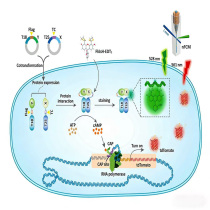
Service Introduction The bacterial two-hybrid system is a method used in Escherichia coli to study protein-protein interactions. This system is based on transcriptional activation and involves the production of two fusion proteins in bacteria, whose interaction can activate the transcription of a reporter gene. This bacterial two-hybrid system has been used to study proteins that interact in organisms ranging from prokaryotes to eukaryotes, and can also be used to identify interacting proteins in protein complex libraries. Service Advantages ▶High throughput, short cycle, rapid identification of interaction targets: Leveraging the rapid growth characteristics of E. coli, initial library screening can be completed in 3-5 days, with validation results available within a week. ▶In vivo detection, real environmental conditions, strong specificity, and low background: Protein interactions are directly validated in the active bacterial cellular environment, better reflecting a close-to-natural folding state and interaction context. ▶From validation to discovery, providing a one-stop solution: We not only provide interaction validation for known protein pairs but also excel at performing large-scale library screenings (such as genomic libraries or mutant libraries) and can precisely identify key interaction domains or residues. ▶Professional team support throughout, with clear and reliable data delivery: Equipped with an experienced team of project scientists, we provide one-on-one professional support from experimental design to data analysis. Service Process
Article Case Highly conserved regulatory activity of theANR family in the virulence of diarrheagenic bacteria through interaction with master and global regulators academic journal:Scientific Reports
25 fusion plasmids for Ler, HNS, and Rnr were generated (A) and cotransformed in E. coli BTH101 strain. Positive Rnr–HNS and Rnr–Ler interaction were confirmed on plates (C). The β-galactosidase activity was determined in the BACTH system for strains cotransformed with HNS/Rnr and Ler/Rnr derivatives. (B,D) Represent two independent experiments run with different BACTH clones. As controls, the E. coli BTH101 strain was co-transformed with either empty vectors (pKNT25 and pUT18) (negative control) or vectors encoding two irrelevant proteins (pKNTAap, pUT18YicS). Plasmids encoding the zip fragment (pKT25-zip and pUT18-zip) were used as a positive control in the BACTH system (B–D). Asterisks indicate significant differences by ANOVA (**P<0.001). Applicable Fields ▶Protein interaction research: The bacterial two-hybrid system is widely used to study interaction networks between proteins. By identifying and verifying interactions between proteins, it is possible to reveal the composition and structure of protein complexes, thereby gaining deeper insights into biological processes such as cellular signal transduction, transcriptional regulation, and metabolic pathways. ▶Protein function research: The bacterial two-hybrid system can be used to study protein functions and regulatory mechanisms. For example, by identifying interactions between proteins and transcription factors, nucleic acid-binding proteins, and others, it is possible to understand the role of proteins in gene regulation, as well as the establishment and maintenance of regulatory networks. ▶Drug development: The bacterial two-hybrid system can be applied in the field of drug development. By screening for interactions between drug molecules and target proteins, it is possible to evaluate potential drug efficacy and side effects, optimize drug design, and accelerate the drug discovery process. ▶Disease research: The bacterial two-hybrid system can be used to study protein interactions related to diseases. By screening proteins that interact with disease-related genes, it is possible to uncover the mechanisms of disease occurrence and identify potential therapeutic targets. ▶Evolutionary biology research: The bacterial two-hybrid system can be used to study protein interactions between species. By comparing interaction networks across different species, it is possible to understand the evolutionary changes in protein interactions and explore the basis of species adaptability and evolution. |