Chinese
 English
|
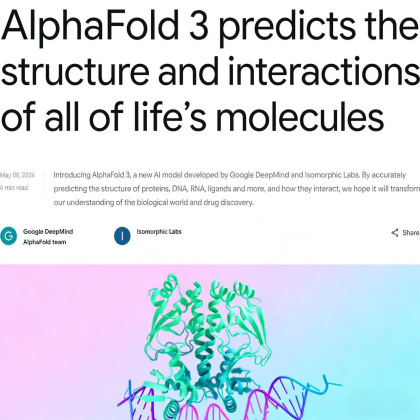
Service Introduction igital simulation library screening refers to building a database based on published CNS and other high-quality papers, as well as databases such as STRING, BioGRID, iDRBP-MMC, and JASPAR. It provides the most suitable personalized project plans according to the client's research needs, using objective interaction and regulatory results as the standard. Combined with yeast two-hybrid libraries and validation (Y2H), bimolecular fluorescence complementation (BiFC), luciferase complementation assay (LCA), co-immunoprecipitation (Co-IP), GST pull-down assay (GST Pull-Down), yeast one-hybrid libraries and validation (Y1H), dual-luciferase reporter assays, electrophoretic mobility shift assays (EMSA), chromatin immunoprecipitation sequencing (ChIP-seq), and other validation results, it comprehensively analyzes protein/protein or protein/nucleic acid interactions and regulatory relationships. Service Advantages ▶High-precision screening: Newly upgraded four-step screening process, incorporating the latest AlphaFold3 interaction analysis software, outputs high-confidence interaction results; ▶High-throughput primary screening: Houses genome-wide digital libraries for over 100 species and transcription factor libraries for more than 20 species, allowing direct screening and high-throughput evaluation of tens of thousands of proteins, saving waiting time; ▶High-quality images: The premium service provides five sets of protein 3D model binding site analysis images, clearly showing binding sites, hydrogen bonds, and distance information, offering comprehensive interaction details; Service Process
Article Case The Nucleome Data Bank: web-based resources to simulate and analyze the three-dimensional genome academic journal:Nucleic Acids Research
The .ndb file format. The .ndb format is designed to store data about the 3D conformation of genomes and contains enough information to be a sufficient input for physical simulations of chromosomes. The .ndb file format is inspired by the .pdb format and it is designed in strict analogy with it. The file contains 12 fields marked in figure by different colors. The first field describe the type of nuclear element: CHROM for a chromatin segment or DNAELE for any other biological element associated with DNA, whether this element is bound to DNA or free to diffuse in the nucleus. The second field is the sequential index associated to the nuclear element. The third field reports epigenetic information for the CHROM elements (chromatin type annotations in this case) or any two-letter identifier for DNAELE, TF, for a transcription factor, CH for cohesin protein complex, for example. The fourth field contains information about the DNA sequence, such as the presence of a CTCF-binding motif together with its orientation. Field number five labels the different molecular chains, e.g. 1P for the paternal copy of chromosome 1 and 1M for the maternal copy. Field number six contains a progressive index for the elements within their respective molecular chain. Fields seven, eight and nine are the spatial coordinates X, Y and Z of the nuclear element. Fields 10 and 11 represent the start and end genomic coordinate of the locus in the case of CHROM element. For DNA-bounds DNAELE elements fields 10 and 11 indicate the binding site, while a dash indicates that the element is unbound. In case of experimental data, the last field reports the variance of the spatial distribution observed for the associated locus. Applicable Fields ▶Plant stress biology and molecular breeding; ▶Functional genomics of microorganisms and host interaction studies; ▶Research on gene expression regulatory mechanisms; ▶Synthetic biology and genetic circuit design. |