Chinese
 English
|
|
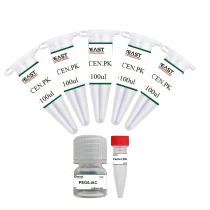
CEN.PK2-1C Chemically Competent Cell
CEN.PK2-1C Chemically Competent Cell
CEN.PK2-1C belongs to the famous CEN.PK series of brewing yeast strains, which was primarily developed by the laboratory of Professor Jack T. Pronk at Delft University of Technology in the Netherlands. The aim was to create a set of standard laboratory strains with a clear genetic background and excellent physiological characteristics suitable for metabolic engineering and physiology research, addressing the shortcomings of commonly used strains such as S288C and BY4741 in certain physiological traits (e.g., growth rate, glycolysis, response to nutritional limitations). The ancestral strains of the CEN.PK series are complex and trace back to hybrid combinations of industrial and laboratory strains, with major contributors including CBS 6412 (a strain used for baking or brewing) preserved by the Dutch Culture Collection of Yeast (CBS) and the laboratory strain FL100 (a strain commonly used for basic research). Through a series of carefully designed hybridizations, sporulation separations, and selection steps, a combination of isogenic strains with different mating types and nutritional deficiencies was ultimately established, including CEN.PK113 (MATa), CEN.PK2-1C (MATα), and CEN.PK122 (MATa/α diploid). The selection markers for the CEN.PK2-1C strain are: leu2, ura3, trp1, his3, which can be used with inducible plasmids such as pYES2, pESC-LEU/URA/TRP/HIS, or constitutive expression plasmids like pGADT7. The competent cells of CEN.PK2-1C are produced through a special process and can be stored at -80°C for 12 months, with the pYES2 plasmid (5857bp, AmpR) showing a transformation efficiency of >103 cfu/μg DNA.
1. This product is for scientific research use only. Please do not use it for medical, clinical diagnosis or treatment, food and cosmetics, etc. Please not store it in a general residential area. 2. For your safety and health, please wear a lab coat and disposable gloves and masks when operating. 3. The experimental can be affected by a variety of factors, and the relevant treatment is limited to the product itself, and does not involve other compensation. |